
The coaching platform that makes development visible
Iceberg accompanies you through every conversation – from preparation to parent communication, so you can focus on what really matters: the student in front of you.
On the computer, on the tablet, and on the mobile phone
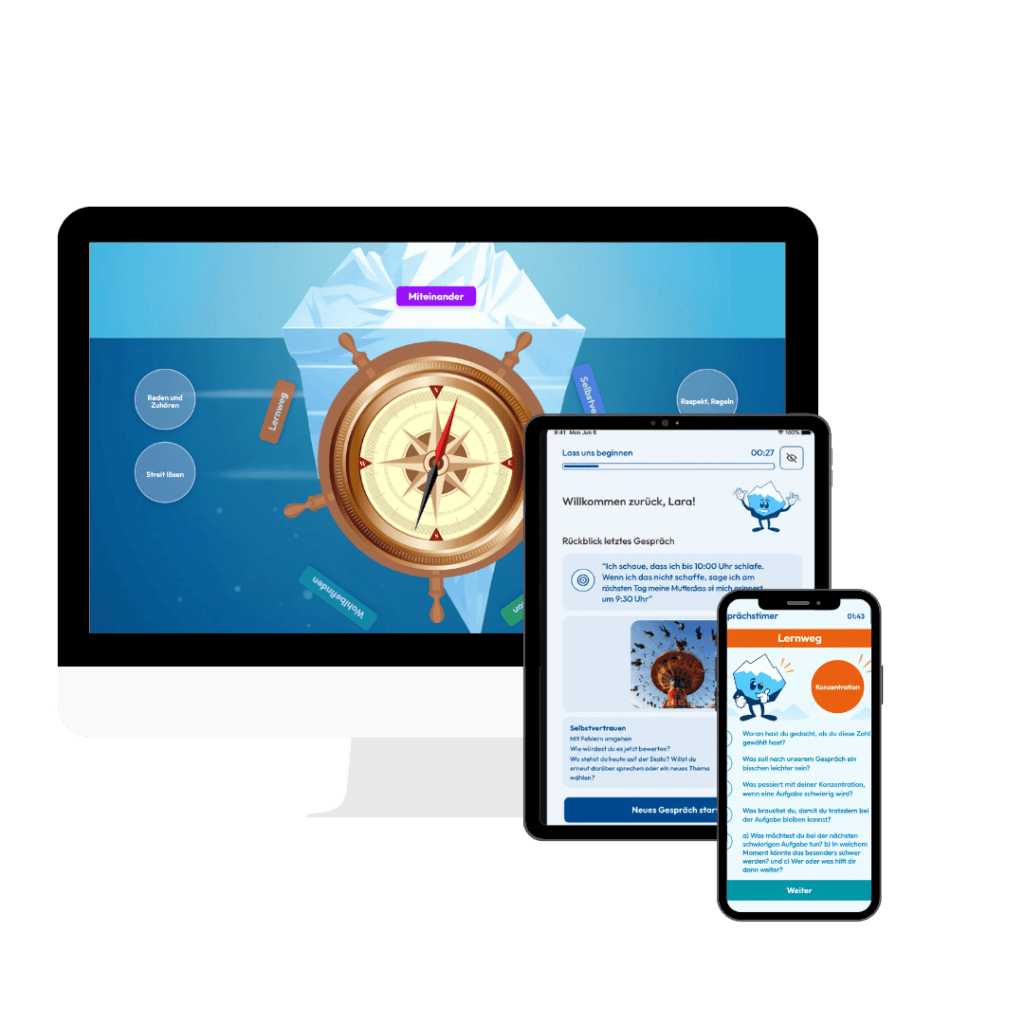
Functions
Everything you need for meaningful conversations Guided conversation flow
Automatic transcription
Conversations are recorded and transcribed in real-time while everything is accurately captured in the background. You no longer have to divide your attention between listening and taking notes. This way, you can truly remain present with your child.
Smart impulses and question suggestions
During the conversation, the app provides you with relevant prompts and empowering questions developed by certified learning coaches and educational therapists. This helps you stay on track, dive deep right from the start, and lead conversations that move people and spark real change.
AI-generated summaries
After each conversation, the app automatically creates a clear and structured summary. It highlights strengths, key discussion points, and agreed-upon next steps. What used to take a lot of time is now done in just a few minutes.
Student profiles and developmental progress
Every student has a dynamic profile that makes strengths, competencies, and the level of independence visible. You can track development over time and recognize patterns across different areas. This creates a complete and meaningful picture of the development of every student.
Designed for sustainable conversations
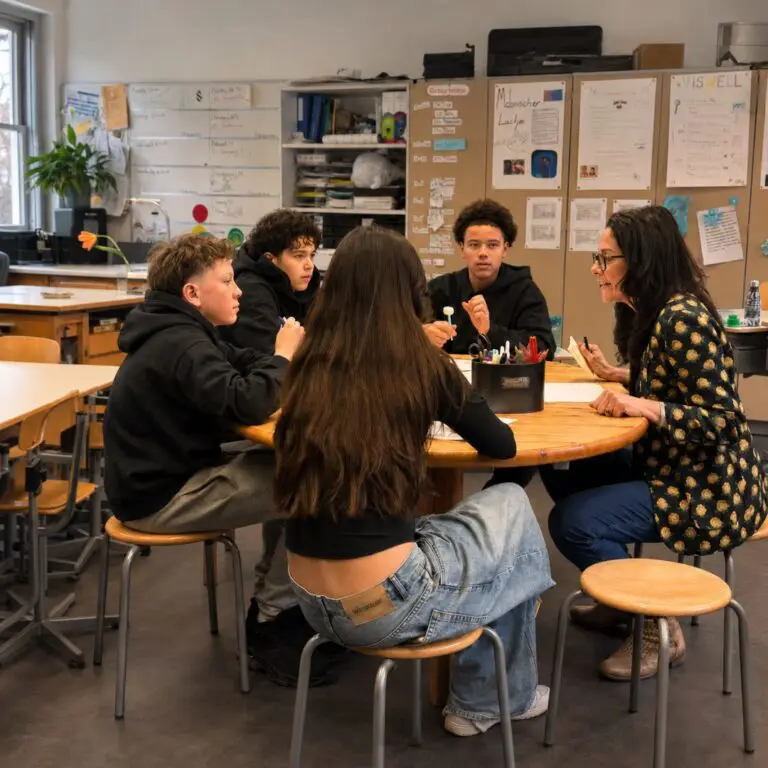
Relationship
Looking closely together and staying in dialogue.

Trust
Creating a safe space where development becomes possible.
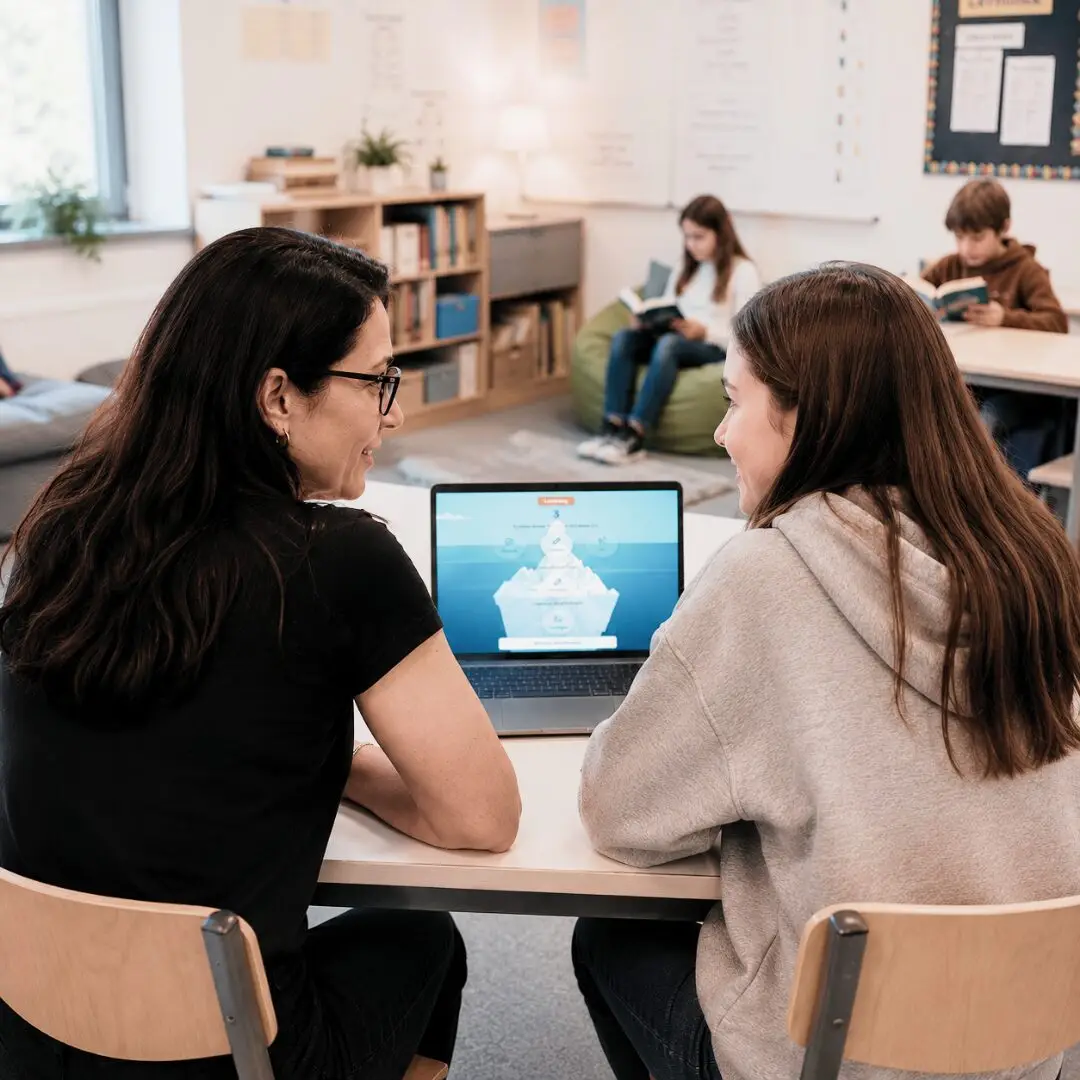
Development
Use feedback, recognize progress, and guide the next steps.
The result
Ten points that are changing
01
Students who truly feel seen
Every student is given space to speak and reflect. Even quieter children open up, creating stronger relationships, more trust, and higher participation.
02
More time, less administration
All notes, summaries, and parent information are generated automatically. What used to mean up to an hour of documentation after each conversation is reduced to just a few minutes.
03
Structured conversations without guesswork
Every conversation follows a clear structure – before, during, and after. You always know which question fits next, without having to improvise or repeat the same patterns.
04
Deeper conversations with students
Go beyond grades and superficial topics. Iceberg helps you reveal real challenges, hidden strengths, and the deeper factors that truly influence a child's development.
05
Goals that are actually implemented
The WOOP method makes goals concrete and actionable. Students don't just set intentions, but identify obstacles and define clear steps to move forward.
06
Parents effortlessly included
After each conversation, a structured and supportive summary is ready to be sent to parents in their preferred language. They stay informed, involved, and aligned without any extra effort.
07
Fully present during the conversation
You don't have to take notes or manage documentation during the conversation. You can focus entirely on the child while the app captures and structures everything in the background.
08
Continuous improvement through feedback
Every conversation contains an integrated reflection. Over time, you strengthen your conversational skills and improve the quality of your conversations step by step.
09
Visible development of students
Track development in competencies, independence, and personal responsibility. Progress becomes measurable and visible – not just reflected in grades.
10
Less stress, more safety
You enter every conversation prepared and supported. With a clear system, conversations become more predictable, more effective, and significantly less stressful.
Methodology
Research-based. Made for teachers.
Scientifically sound and developed for everyday school life
Visible Learning
Eisberg is based, among other things, on John Hattie's research on Visible Learning. His comprehensive synthesis of more than 800 meta-analyses shows that a viable relationship between teacher and student has a significant impact on learning. In the original evaluation, an effect size of d = 0.72 is reported for this. Later overviews cite d = 0.52. Both values lie above Hattie's hinge point of d = 0.40.
The WOOP Method
To achieve this goal, Eisberg utilizes the scientifically proven WOOP method by Professor Gabriele Oettingen. WOOP stands for Wish, Outcome, Obstacle, and Plan. Students formulate a wish, imagine the desired outcome, identify an internal obstacle, and develop a concrete if-then plan for dealing with it. This ensures it doesn't just remain positive thinking: a wish turns into an actionable next step.
The Five Iceberg Levels
The five iceberg levels make development and increasing independence visible. They range from Deep Sea, with close guidance, to Summit, where students independently demonstrate a competency. Each competency is considered individually, as development does not progress at the same rate in all areas. This allows you to make visible what students are already succeeding at, where they need support, and what potential they themselves might not yet recognize.
Start now
The Eisberg app guides you through every phase of the learning and coaching conversation, from preparation to the parent email, so that you can truly be present.
Modal Box Title